
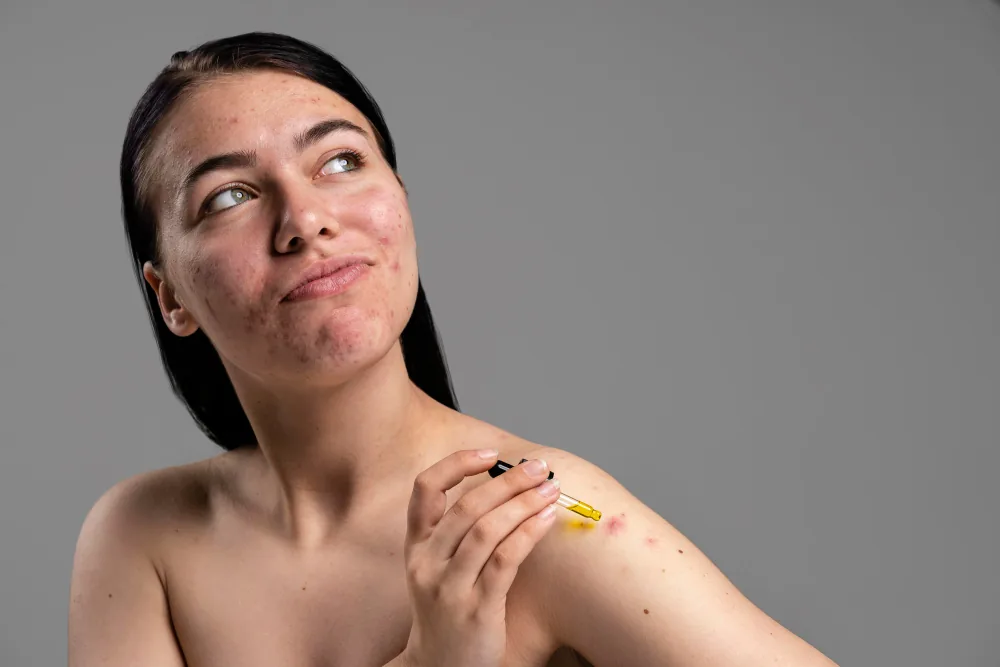
Did you know that acne is not just a teenage skin problem, and that adult acne exists too? It does – and adult acne is more common than you might think: in an American survey, 26% of women and 12% of men aged 40–49 reported having acne. It can be caused by hormonal changes, increased sebum production, inflammation and various external factors. The good news is that adult acne can be treated effectively with the right skincare and, where needed, dermatological treatment. But what causes it, and how can it be treated? Read on to find answers to all your questions.
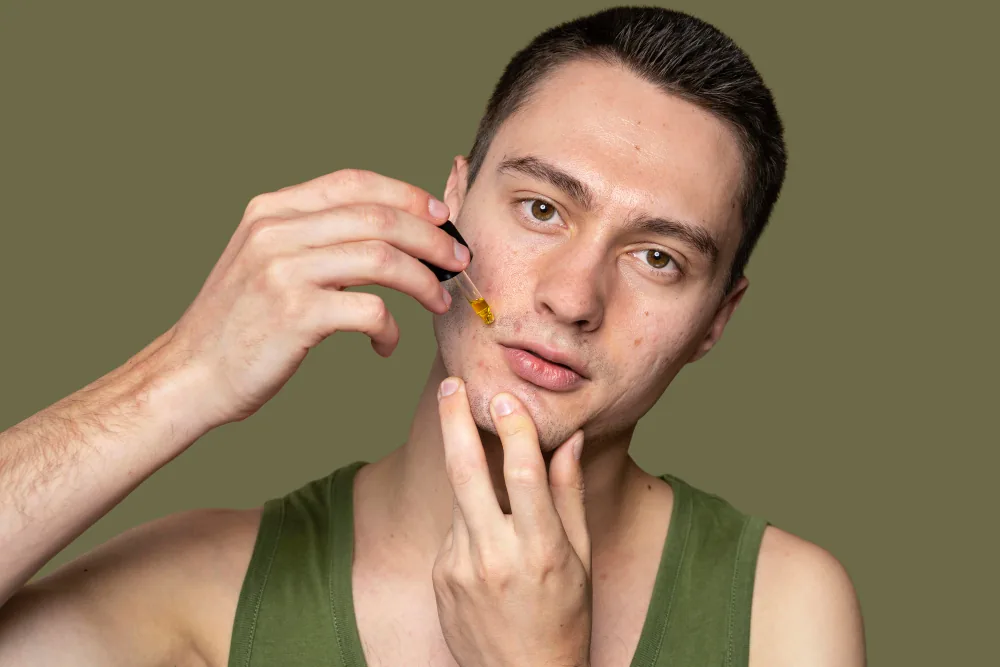
What is adult acne, and how does it differ from teenage breakouts?
We speak of adult acne when acne symptoms persist, return or appear for the first time after the age of 25. Contrary to popular belief, acne does not only affect adolescents – it can occur in adult women and men alike.
The share of women aged 30–39 who reported acne in an American survey of more than 1,000 people (men: 20%).
Even among women aged 40–49, one in four respondents had acne.
The same rate among men aged 40–49 – women were affected more often in every age group.
The basic processes behind adult and teenage acne are similar: excess sebum production, clogged pores, the bacterium Cutibacterium acnes and inflammation can all play a role.
Adult acne, however, often appears on the lower part of the face, especially on the chin and along the jawline, although it can affect other areas too. Symptoms can include blackheads, inflamed pimples and deeper, painful lumps. In adulthood, hormonal fluctuations, stress and certain skincare habits can also contribute to pimples persisting or coming back.
What causes adult acne?
Adult acne can be caused by a combination of several factors, including hormonal changes, increased sebum production, clogged pores and inflammatory processes. Certain lifestyle and external factors can make the symptoms worse.
The following factors can play a role in the development and persistence of adult breakouts:
- Hormonal changes: Androgen hormones can increase the skin's sebum production, which can contribute to clogged pores. In women, hormonal fluctuations linked to the menstrual cycle, certain contraceptives and some hormonal disorders, such as polycystic ovary syndrome (PCOS), can also play a part.
- Stress: Long-term stress can affect how the sebaceous glands work and can intensify existing inflammation, so pimples may get worse.
- Unsuitable cosmetics: Some skincare and make-up products can contribute to clogged pores, although well-chosen cosmetics can be a useful addition to treatment.
- Smoking: Some studies have found a link between smoking and persistent adult acne, particularly in women.
It is important to know that adult acne does not necessarily mean a hormonal disorder. Pimples can also develop with normal hormone levels, for example because the sebaceous glands are more sensitive to hormones.
Why do pimples appear after the age of 30 or 40?
Many people are surprised when pimples reappear on their face years after adolescence. Yet adult acne is not rare after the age of 30 or 40, especially in women. One of the main reasons is that hormonal changes do not end after puberty.
In the female body, androgen hormones – which are also present in women in smaller amounts – influence how the sebaceous glands work. If the effect of these hormones increases, the skin may produce more sebum, which can contribute to clogged pores and inflamed pimples.
One curious feature of hormonal acne is that it can appear even when hormone levels measured in the blood are normal. This is because the skin's sebaceous glands may react more sensitively to androgens.
The hormonal changes of different stages of life can also influence breakouts:
- Over 30: Hormonal fluctuations linked to the menstrual cycle, or stopping or changing contraceptives, can contribute to recurring pimples.
- Over 40: The hormonal changes of perimenopause, the transition period before menopause, can also affect the skin and may trigger or worsen acne symptoms in some women.
However, pimples that appear after 30 or 40 cannot always be traced back to a hormonal problem. Genetic predisposition, increased hormone sensitivity of the skin and other factors can also play a role together.
How can adult acne be treated effectively?
Effective treatment of adult acne depends on the severity and type of the pimples and on the factors behind them. In milder cases, the right skincare and topical active ingredients can bring significant improvement, while more stubborn, inflamed or recurring pimples may need dermatological treatment.
The most commonly used treatment options:
- Topical treatments: Azelaic acid, benzoyl peroxide and retinoids can help prevent clogged pores, reduce inflammation and limit the development of new pimples.
- Medication: For moderate or severe acne, a dermatologist may recommend oral medicines, such as antibiotics taken for a limited period or, in more severe cases, isotretinoin.
- Hormonal treatment: In women, especially with recurring acne linked to hormonal effects, certain hormonal treatments, such as combined contraceptive pills or spironolactone, may also be considered after a doctor's assessment.
In Hungary, oral and hormonal treatments are prescription-only medicines, and a doctor always decides on their use.
It is important to know that treating adult acne takes patience and consistency. Visible improvement often takes several weeks, and appropriate maintenance treatment can help prevent pimples from coming back.
What skincare routine is recommended for adult acne?
In treating adult acne, it is not only the right active ingredients that matter, but also protecting the skin's natural barrier. Cleansing too often, harsh exfoliants and drying cosmetics can irritate the skin, which can make pimples harder to treat. That is why the best choice is often a simple skincare routine used consistently.
What should you pay attention to in your daily skincare?
- Gentle cleansing: Morning and evening, use a gentle, soap-free cleanser that removes dirt and excess sebum without drying out the skin.
- Proper moisturising: Acne-prone skin needs moisture too. Light, non-comedogenic moisturisers, especially those containing ceramides, glycerin or hyaluronic acid, can help preserve the skin barrier.
- Targeted active ingredients: Azelaic acid, niacinamide or salicylic acid can be a useful addition to your skincare, but it is best to introduce active ingredients gradually, adjusted to how sensitive your skin is.
- Daily sun protection: A broad-spectrum sunscreen of at least SPF 30 is especially important, as it can help prevent the dark marks left behind by inflamed pimples from darkening.
Less really can be more: using several strong active ingredients at the same time does not necessarily lead to faster improvement, but it can increase skin irritation. If your skin feels tight, peels or burns, it is worth reviewing the products you use.
The right skincare supports the treatment of adult acne, but on its own it is not always enough for persistent or inflamed pimples.
You can read more about cleansing, moisturising and sun protection for acne-prone skin in the skincare chapter of our comprehensive acne guide.
When should you see a dermatologist about adult acne?
With adult acne, it is worth seeing a dermatologist if pimples persist, keep coming back, are painful or cause scarring. However, there is no need to wait until symptoms become severe – early, appropriate treatment can help prevent permanent skin damage.
It is especially advisable to seek specialist help if:
- Deep, painful, inflamed pimples appear that are slow to heal.
- Pimples leave scars or lasting dark marks behind.
- Home skincare and over-the-counter products bring no improvement even after 6–8 weeks of consistent use.
- Pimples appear suddenly in adulthood, especially if they come with irregular periods or increased hair growth.
- The skin problem affects your self-confidence and everyday quality of life.
A dermatologist can help identify the possible causes of your symptoms and recommend treatment suited to the type and severity of your acne.
If your pimples are small, uniform and itchy, and do not improve with the usual acne treatment, it is not always common acne. Read more here: Fungal acne: how to recognise it and how it differs from acne
Frequently asked questions about adult acne
Can adult acne go away on its own?
Yes, in some cases adult acne can ease or clear up on its own, for example when hormonal changes settle down. However, pimples can also persist or keep coming back for years. If your acne is persistent, inflamed or causing scars, it is worth seeing a dermatologist.
How long does it take for adult acne to improve?
With the right treatment, the first visible improvement usually appears after 6–8 weeks, while more significant results often take 3–4 months. How quickly it improves depends on the severity of the acne, the chosen treatment and how your skin reacts.
Can diet affect breakouts?
Yes, in some cases diet can affect how severe adult acne is. Studies have found a link between acne and a diet with a high glycaemic load, and the consumption of certain dairy products – especially milk. However, dietary changes alone do not replace appropriate dermatological treatment.
Is adult acne always hormonal?
No, adult acne is not always hormonal. Although hormonal fluctuations can play an important role, genetic predisposition, increased sebum production, inflammation, stress and certain cosmetics can also contribute to breakouts.
Which herbal ingredients are recommended for acne-prone skin?
Tea tree oil and green tea extract may be promising plant ingredients for caring for acne-prone skin, as some smaller studies have suggested anti-inflammatory and anti-acne effects. However, the scientific evidence is still limited. Tea tree oil can also cause irritation or an allergic reaction, so it should not be used undiluted. Herbal products do not replace acne treatments with proven effectiveness.
Summary
Adult acne is not just a cosmetic problem but a skin condition that can appear after the age of 30 or 40 and can affect self-confidence. Although hormonal changes, stress and individual predisposition can all play a role in its development, the right skincare and targeted treatment can help relieve the symptoms. If pimples keep coming back or home treatment does not help, it is worth asking a dermatologist for help. With AIP Clinic's online dermatology service, you can get a specialist's opinion from home, typically within 24 hours, so you can take the first step towards healthier skin in time.
This article is for information only and does not replace examination, diagnosis or treatment by a specialist. If you have persistent or recurring skin symptoms, see your GP or a dermatologist.
Sources used
- Collier CN, et al. The prevalence of acne in adults 20 years and older. J Am Acad Dermatol. 2008;58(1):56–59. (n=1013, self-reported; women vs. men: aged 30–39 35.2% vs. 20.1%, aged 40–49 26.3% vs. 12.0%) – pubmed.ncbi.nlm.nih.gov
- Rocha MA, Bagatin E. Adult-onset acne: prevalence, impact, and management challenges. Clin Cosmet Investig Dermatol. 2018;11:59–69. – pmc.ncbi.nlm.nih.gov
- Echevarria IP, et al. Acne in adulthood: A cross-sectional study of contributing hormonal, dietary, and environmental factors in adults in Puerto Rico. JAAD Int. 2026;24:256–258. – pmc.ncbi.nlm.nih.gov
- Liu K, Nassim J. Adult acne: Understanding underlying causes and banishing breakouts. Harvard Health Publishing, 2019. – health.harvard.edu
- Reynolds RV, et al. Guidelines of care for the management of acne vulgaris. J Am Acad Dermatol. 2024. – aad.org